
Anúncios
The professional kitchen is one of the environments that welcomes the most newcomers every year — and one of the few sectors where lack of experience isn’t necessarily an obstacle. Restaurants, diners, hotels, catering companies, and fast-food chains are constantly hiring kitchen helpers, and most of these positions don’t require an extensive resume or a culinary degree. What really matters during selection is willingness to learn, quick reflexes, and the ability to work as a team under pressure — traits that anyone willing to put in the effort can develop quickly right on the job.
If you’ve ever thought about entering the food service industry but assumed you “didn’t have enough experience,” now’s the time to rethink that idea. The kitchen helper role was created precisely for people just starting out: it’s the entry point for anyone who wants to learn hands-on, build momentum in a professional environment, and, over time, move into more specialized kitchen roles such as line cook, cook, and even chef. Many people who now run renowned kitchens started out exactly this way, washing dishes or organizing supplies in their first few months on the job.
In this piece, you’ll learn what a kitchen helper actually does, why these positions come up so frequently in the market, what the real requirements are for applying, how the daily routine works in a professional kitchen, what benefits usually come with these jobs, what the growth paths look like within the field, and, most importantly, how to stand out even without prior experience. If you want to take your first step into the culinary world, keep reading — the information below could open the door you’ve been looking for.
What Does a Kitchen Helper Do?
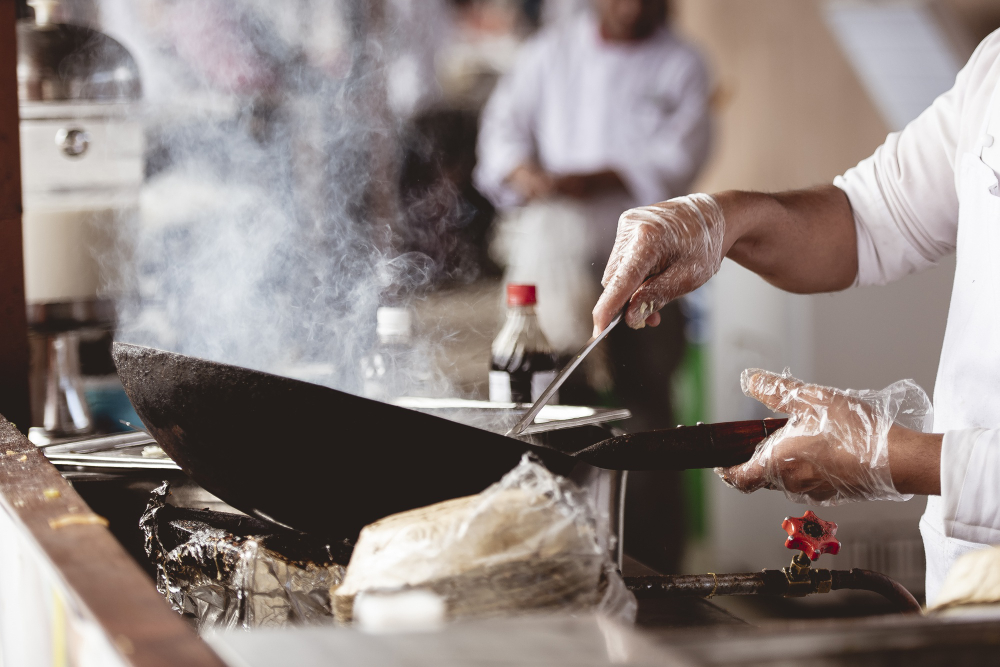
The kitchen helper is a fundamental piece for keeping any professional kitchen organized and running efficiently. Duties vary depending on the establishment, but typically include:
Anúncios
- Food prep work, such as washing, cutting, and organizing ingredients
- Direct support to cooks during dish preparation
- Cleaning and organizing utensils, counters, and equipment
- Basic inventory control, helping restock kitchen supplies
- Following hygiene and food safety standards
- Proper waste disposal and sorting of recyclable materials
- Assisting with incoming deliveries, checking products arriving at the kitchen
This intense routine is exactly what makes the role so formative: within a few months, the professional already understands how a kitchen fully operates, absorbing techniques and experience that would be hard to learn through theory alone. Many say the learning gained in the first few months is equivalent to years of practical knowledge, since kitchen work demands constant repetition and immediate correction of mistakes — which naturally speeds up the learning curve.
Why Do These Positions Come Up So Often?
The food service industry is one of the biggest job generators in the country, for a simple reason: restaurants, diners, and fast-food chains have a constant flow of customers and need full teams to keep up with daily demand. Add to that the continuous growth of delivery and delivery apps, which has driven a significant increase in order volume — and consequently in the need for kitchen labor — over the past few years.
Among the main reasons behind this high demand are:
- Delivery and delivery app growth, increasing the daily volume of orders
- High natural turnover in the industry, since many use the role as a stepping stone to other positions
- Constant opening of new establishments, especially fast-food chains and franchises
- Seasonality in the industry, with hiring spikes around holidays and tourist seasons
- Difficulty retaining staff, which leads to frequent position openings
This constant cycle of staff turnover is, in practice, good news for anyone looking for an opportunity: these positions rarely stay scarce for long.
What Are the Real Requirements to Apply?
Contrary to what many people assume, most kitchen helper positions don’t require technical training or proven experience. The most common requirements include:
- Minimum age of 18 (in some cases, 16 with an apprenticeship program)
- Availability, including weekends and holidays
- Good physical stamina, since the role involves standing for long periods
- Attention to personal hygiene and organization
- Ability to work as a team and follow instructions quickly
- Basic identification documents up to date
- Good communication, to understand and relay information quickly during service
Having a quick food handling certification is a nice bonus, but it’s far from mandatory — most establishments provide on-the-job training within the first few days, covering everything from basic hygiene rules to how the equipment on-site works.
How Does the Kitchen Routine Work?
A kitchen helper’s routine tends to be intense, dynamic, and full of movement — traits that make time fly by, but also demand constant energy and focus. Generally, the day-to-day includes setting up the kitchen before the shift begins, prepping ingredients for the day’s dishes, direct support to cooks during peak hours, ongoing cleaning of utensils and counters throughout service, restocking supplies as they’re used, and final cleanup of the space at the end of the shift.
In larger establishments, the helper may also rotate between different kitchen stations — such as salads, grill, or desserts — gaining a broad view of the entire production process. This rotation speeds up learning considerably and prepares the professional for more advanced roles down the line, since they come to understand not just one isolated step, but the full operation.
Benefits That Usually Come with the Job
As with other operational roles, the kitchen helper position usually comes with benefits that make the offer even more attractive:
- Transportation allowance
- On-site meals (breakfast, lunch, or dinner, depending on the shift)
- Formal employment status, guaranteeing full labor rights
- Opportunity for growth into roles like line cook, cook, and station chef
- A constant learning environment, with direct contact with experienced professionals
- Uniform provided by the company, in many cases
This last point tends to be one of the biggest draws of the role: the professional kitchen is an environment where you learn by doing, and every shift represents a new opportunity for technical growth.
Growth Paths Within the Kitchen
Starting as a helper, it’s common for a professional to progress over time into positions like line cook, station chef, and eventually sous chef or executive chef. This path usually doesn’t depend on diplomas, but rather on time on the job, commitment, and willingness to absorb techniques from more experienced team members — making the kitchen one of the few professional environments where hands-on experience really counts for more than a formal resume.
How to Stand Out in the Hiring Process
Even without prior experience, a few habits can significantly boost your chances of getting hired:
- Show physical and mental readiness for the fast pace of the kitchen
- Demonstrate genuine interest in the culinary and food service field
- Reinforce your availability, including nights and weekends
- Mention informal experience, such as helping out cooking at home or at events
- Show up well-groomed, since hygiene is a closely watched criterion
- Show initiative, demonstrating you’re always willing to help with other tasks
Recruiters in this field tend to value candidates who show humility to learn and the stamina to handle the typical rush of peak hours — often, these qualities matter more than any extra line on a resume.
Is It Worth Starting as a Kitchen Helper?
Absolutely. Beyond being one of the most accessible entry points into the job market, the role offers hands-on experience that’s hard to learn in a classroom. For anyone interested in the culinary field, it’s the real first step in a career that can lead to increasingly specialized positions — and for anyone just looking for a stable, immediate opportunity, it’s a role that guarantees formal experience, constant learning, and open doors for the future.
If you’re looking to re-enter the workforce or land your first job, keep an eye on kitchen helper openings in your area. Demand is constant, the requirements are accessible — and the next step might simply be applying.